A retractable seating system turns a flat, open floor into tiered seating in minutes, then folds it all away when you need the space back. Venues love it for one reason: flexibility. The same hall can host a seated concert tonight, a standing exhibition tomorrow, and a sports match next week. This guide explains how a retractable seating system works, where it fits, what to plan for, and how to specify one for your venue.
What is a retractable seating system?
A retractable seating system — also called telescopic seating — is a tiered seating bank that extends out for use and folds back into a compact stack when idle. Each row sits on a platform that slides under the row behind it, like a telescope closing. Open it, and the rows step up to give every seat a clear sightline. Close it, and the whole bank collapses against a wall or into a storage bay and frees the floor.
You’ll also hear it called telescopic seating, retractable bleachers, or tiered seating. The idea stays the same: seats when you want them, open floor when you don’t.
How retractable seating works
The system runs on rows of platforms, or decks, mounted on a rolling understructure. To deploy it, the mechanism pushes the rows out and steps them up into tiers. To store it, the rows retract and nest under one another. Operation comes in three forms:
- Manual systems rely on staff to pull and push the rows. They suit smaller banks and tighter budgets.
- Semi-automatic systems use a powered handset to drive the rows while staff guide them.
- Fully motorized systems deploy and retract at the push of a button. They suit large banks and frequent changeovers.
Tono’s GlideSeat Evo uses a smooth, quiet electric mechanism. It moves the rows in and out cleanly and stores them compactly, so a small team can reset a room fast.
Where venues use retractable seating systems
A retractable seating system earns its place wherever a room needs to do more than one job:
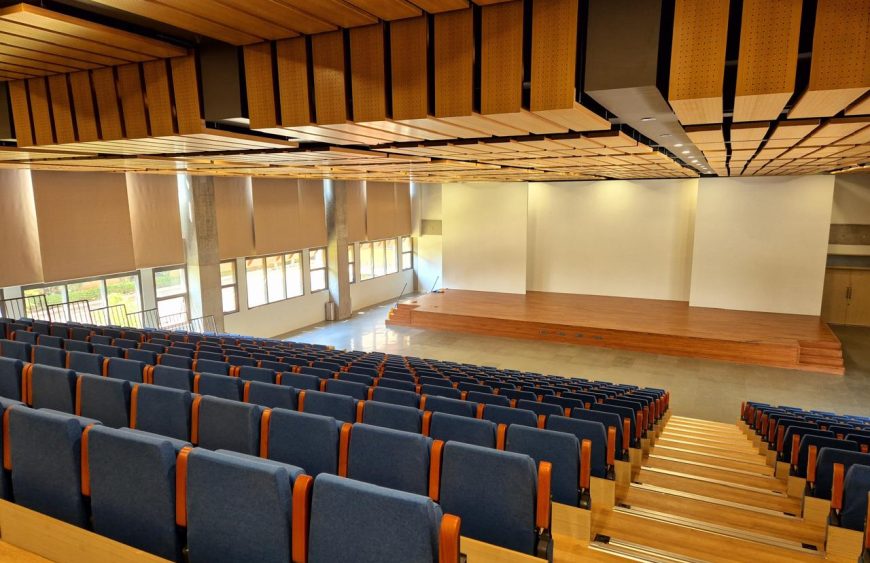
- Auditoriums and performance halls seat an audience for a show, then clear for a reception or rehearsal.
- Multipurpose and community halls switch between seated events, sports, and flat-floor functions.
- Lecture halls and training rooms tier up for a talk, then flatten for group work.
- Sports arenas and gymnasiums open courtside seating for a match, then reclaim the court.
- Places of worship and event spaces flex between large gatherings and open layouts.
The common thread is simple. Every square metre has to work harder, and retractable seating lets one room serve many functions.
What to plan for before you specify
A retractable bank is an architectural element, not just furniture. Plan these points early:
- Stored depth and footprint. A folded bank needs wall space or a storage bay. Confirm how deep it sits when closed.
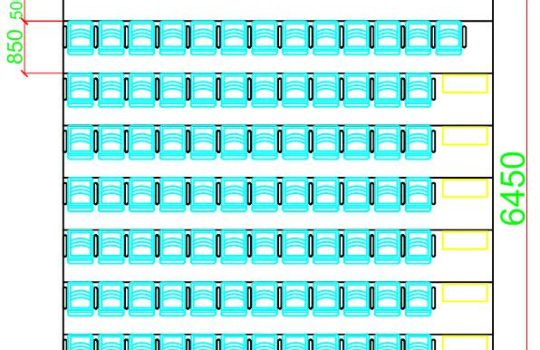
- Row count and capacity. Decide how many tiers and seats you need, plus the rise per row for clear sightlines.
- Seat type. Many systems mix fixed theatre-style seats with bench or lounge options. The GlideSeat range, for example, can pair tiered theatre seats with lounge sofas at the front row.
- Floor and structure. The floor must carry the rolling load, so a structural check comes first.
- Operation mode. Match manual, semi-automatic, or motorized to how often you’ll move it and who’ll operate it.
- Safety. Look for guard rails, anti-trap protection, and controlled motion.
Specifications, dimensions, and CAD resources
Architects and AV consultants design these systems into a space long before purchase. They need dimensions, rise-per-row figures, stored-depth data, and CAD or BIM blocks in DWG and Revit to drop the bank into drawings. Ask the manufacturer for a full spec sheet and CAD files early. That way the seating fits the room, the sightlines work, and the storage space is right. Tono builds each GlideSeat system to project requirements and supports specifiers with the detail they need. Many auditoriums also pair the seating with a large-format projector screen, so plan the AV alongside the seating.
Retractable vs fixed seating: which should you choose?
Choose fixed seating when the room only ever hosts seated events and the layout never changes — a dedicated cinema or theatre, for example. Fixed seats cost less per seat and need no operation.
Choose a retractable seating system when the room must flex. If you ever want the floor clear for another use, retractable seating pays for itself in versatility. One flexible hall can replace two single-purpose rooms.
How much does a retractable seating system cost?
Cost depends on the variables above: seat count, seat type, operation mode, finishes, and the structural work your building needs. A small manual bank costs far less than a large motorized auditorium system with premium seats. Every install is custom, so the practical step is to share your venue type, seat count, and operation preference, then request a tailored quote.
Frequently asked questions
What is a retractable seating system?
It’s a tiered seating bank that extends for use and folds into a compact stack when idle, freeing the floor. People also call it telescopic seating or retractable bleachers.
How does retractable seating work?
Rows of platforms sit on a rolling understructure. To deploy, the rows push out and step up into tiers. To store, they retract and nest under one another. Operation can be manual, semi-automatic, or fully motorized.
Where is retractable seating used?
Auditoriums, performance halls, multipurpose and community halls, lecture halls, gymnasiums, sports arenas, and places of worship — anywhere a room needs both seating and open floor.
What’s the difference between retractable and telescopic seating?
They describe the same product. “Telescopic” captures how the rows nest under each other like a telescope, and “retractable” captures the fold-away result. Manufacturers use the terms interchangeably.
Retractable or fixed seating — which is better?
Fixed seating suits a room that only ever hosts seated events. A retractable seating system suits a room that must switch between seating and open-floor uses.
How much does a retractable seating system cost?
It varies with seat count, seat type, operation mode, finishes, and structural work. Each system is custom-built, so ask for a tailored quote based on your venue.
The bottom line
A retractable seating system gives a venue two rooms in one: tiered seating when an event needs it, and clear open floor the rest of the time. Decide on capacity, seat type, operation mode, and stored footprint, plan the structure and CAD early, and you get a space that adapts in minutes.
Planning a venue or auditorium? Get in touch with your room size, seat count, and how you’ll use the space, and Tono will design and custom-build the right GlideSeat retractable seating system for you.