Digital signage for advertising turns a screen into a sales tool. Instead of a printed poster you can’t change, you get a display that shows promotions, product information, and brand messaging. You update it in seconds, from anywhere. This guide explains how digital signage for advertising works, where it pays off, what it costs, and how to choose the right setup for your space.
What is digital signage for advertising?
Digital signage for advertising is a commercial display system that shows dynamic content to a public audience. A retailer uses it to push offers at the point of decision. An office uses it for announcements. A restaurant swaps menus and prices in seconds. Unlike a consumer TV, digital signage runs all day, every day, and updates remotely.
A complete system has three parts working together:
- A commercial display or totem. A bright, durable screen rated for continuous use, either wall-mounted or free-standing.
- A media player. The hardware that drives the screen and handles images, video, scrolling text, web pages, and live feeds.
- Content management software (CMS). The platform you use to schedule and update content remotely, across one screen or hundreds.
How digital signage for advertising works
The workflow is simple. You design content in the CMS. You schedule it by time, day, or location. The CMS pushes it to the media player behind each screen. The screen plays it. When you want to change the message, you edit it once, and the update appears across every screen you choose. No reprinting, no site visits, no downtime. A single dashboard can manage screens across many stores or branches at once.
Where digital signage for advertising pays off

Different spaces use it in different ways:
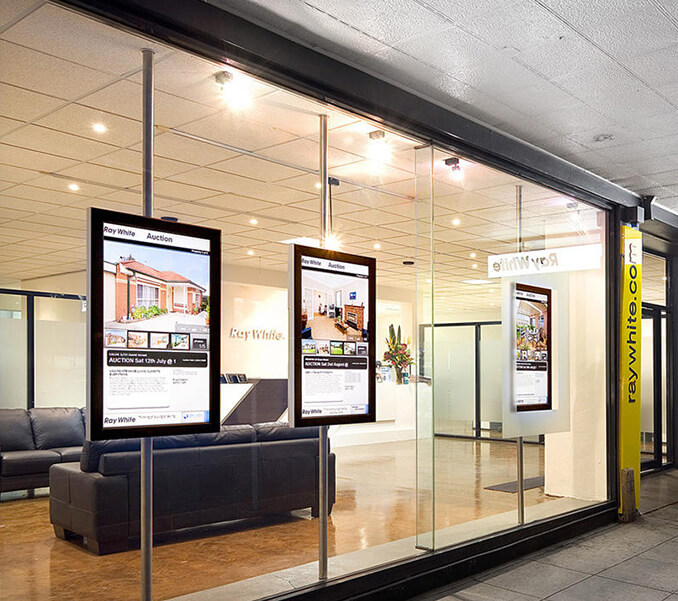
- Retail. Promote offers, show product details, and guide shoppers. A totem at the entrance draws people in, and wall screens turn dead wall space into a sales channel.
- Restaurants and hospitality. Update menus and prices instantly, and promote deals right at the counter.
- Corporate. Share announcements, dashboards, and wayfinding across lobbies and floors.
- Healthcare. Show wait times, directions, and health information in waiting areas.
- Education. Run campus directories, event updates, and notices across buildings.
Wherever a message changes often or needs to grab attention, a screen beats a printed sign.
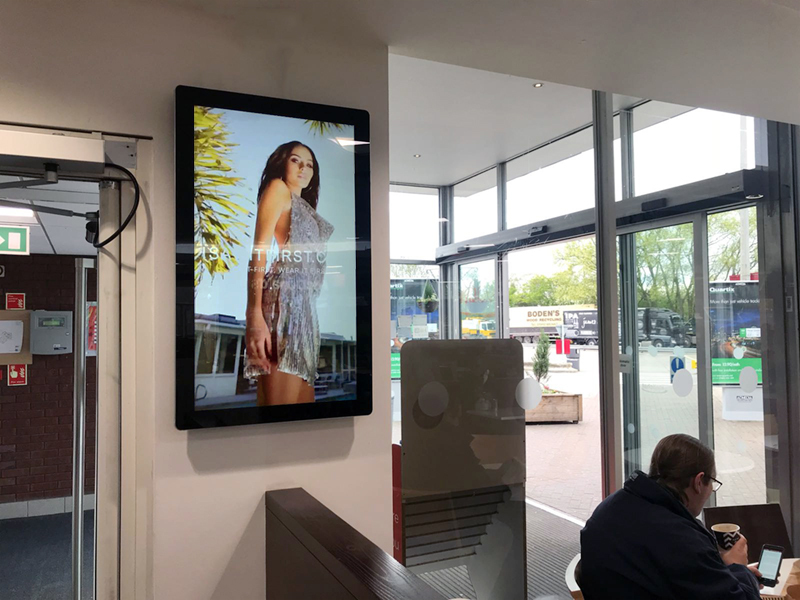
Wall-mounted or floor-standing? Choosing the format
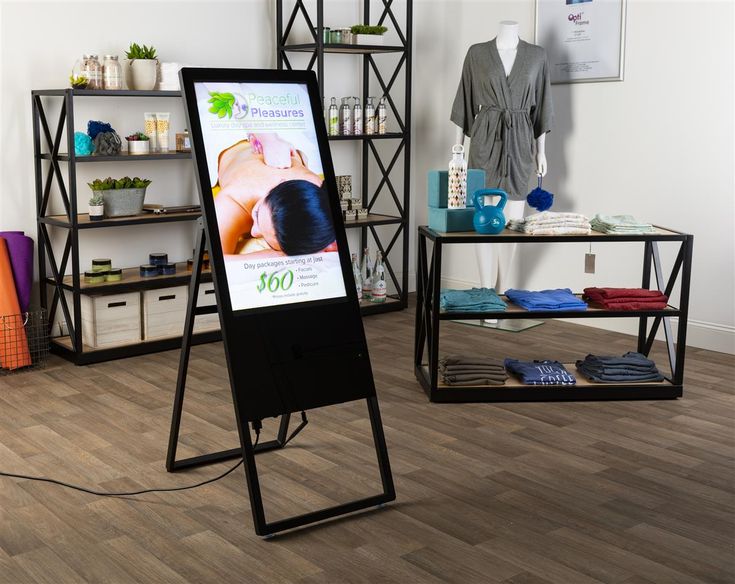
The right format depends on the space:
- Wall-mounted displays suit lobbies, retail walls, meeting rooms, and information points. Tono’s Slate range covers 24″ up to 85″, like the Slate 55.
- Floor-standing totems suit entrances, retail floors, and busy areas where you can’t fix to a wall. Tono’s Obel totems run from 32″ to 65″, such as the Obel 55, and the Frame floor displays add 32″ and 43″ options.
For large feature walls, multiple panels combine into a video wall, driven as one big canvas.
What does digital signage for advertising cost?
Price depends on a few things: screen size, how many screens, indoor or outdoor placement, and your software needs. A single 32″ totem in one shop is a very different budget from a 50-screen network across branches. The mix varies a lot, so the practical step is to share your size, quantity, and locations, then get a tailored quote. As an Indian manufacturer, Tono prices and supports deployments locally, with global shipping for wider rollouts.
What to look for in a digital signage display
- A commercial-grade panel. It must be rated for extended daily or 24/7 use. A consumer TV will fail under that load.
- The right size and placement. Match screen size to viewing distance, and match the mount type to the space.
- Remote content management. Check that the CMS lets you schedule and update screens remotely, and manage many locations centrally.
- Support and warranty. For a business tool, local installation, support, and a solid warranty matter as much as the hardware.
Frequently asked questions
What is digital signage for advertising?
It’s a commercial display system — a screen or totem, a media player, and content management software — that shows promotions, information, and brand messaging to a public audience, updated remotely.
How does digital signage work?
You create and schedule content in the software, which pushes it to a media player behind each screen. To change the message, you edit it once, and the update appears across every screen you choose.
How much does digital signage cost in India?
It depends on screen size, quantity, indoor or outdoor use, and software needs. A single display differs greatly from a multi-location network. Share your requirements for a tailored quote.
Can I manage many screens from one place?
Yes. Content management software lets you schedule, segment, and update content remotely, and manage many players across different locations from a single dashboard.
What screen sizes are available?
Tono’s Slate wall-mounted displays run from 24″ to 85″. Obel floor-standing totems range from 32″ to 65″, with Frame floor displays in 32″ and 43″. Custom sizes are available on request.
Is a regular TV okay for digital signage?
No. A consumer TV isn’t built for continuous use and wears out fast. Digital signage uses commercial-grade panels engineered for extended daily or 24/7 operation.
The bottom line
Digital signage for advertising replaces static, one-off posters with a screen you control in real time. Pick a commercial-grade display in the right size, choose wall-mounted or floor-standing to fit the space, and manage it all remotely through software. Done well, one screen — or a network of them — keeps your message fresh, eye-catching, and always on.
Planning a single screen or a multi-site rollout? Explore Tono’s digital signage systems or request a quote, and we’ll match the right display, player, and software to your space.