



Long warranty Period

Online support

Global Shipping

Speaker wire gauge decides how cleanly power travels from your amplifier to your speakers. Pick the right speaker wire gauge and the signal arrives with full detail. Pick the wrong one on a long run and you lose volume and bass. This guide explains what gauge means, when it matters, and how to choose the right cable for your setup.
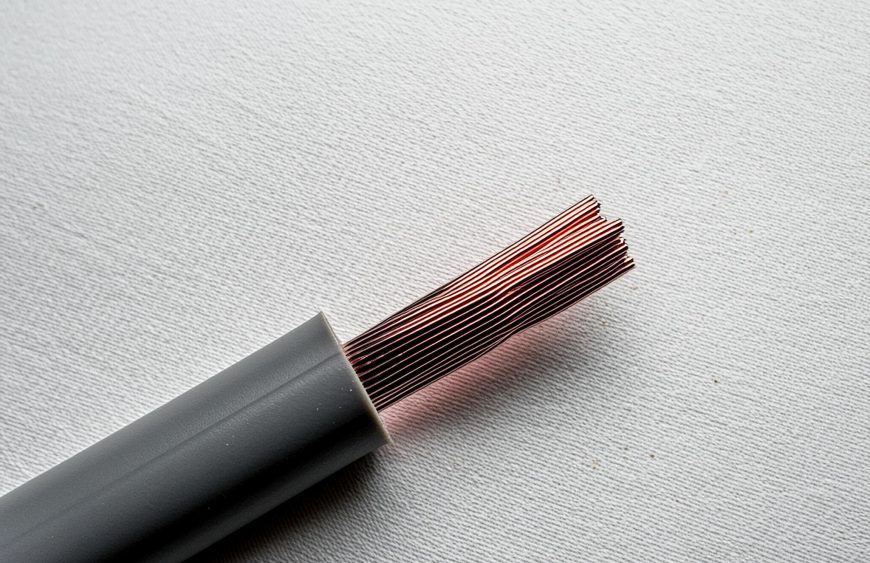
Gauge is the thickness of the copper conductor, measured in AWG (American Wire Gauge). The rule is simple but backwards: a lower number means a thicker wire. So 12 AWG is thicker than 16 AWG. Most speaker wire sits between 12 and 18 AWG.
A thicker conductor carries the signal with lower resistance. Lower resistance means the cable wastes less of the signal as heat. Over a short run this loss is tiny. Over a long run it adds up.
Here is the honest answer. For normal 8-ohm speakers at normal distances, the gauge makes little audible difference. A standard 16 AWG cable suits most rooms.
Gauge starts to matter when:
In those cases a thin cable raises resistance. The amplifier loses grip on the speaker, and the bass turns loose. The fix is a thicker cable, not a pricier one.
Speaker Wire Gauge Calculator
Find the right gauge for your run, based on the 5% resistance rule.
16 AWG
≈ 1.3 mm²
For runs inside a wall, use a CL2-rated cable like the Tono Pro CI Series. For long runs, oxygen-free copper holds detail better — see the full speaker cables range.
Match the gauge to the length of the run and the speaker:
| Cable run | Speaker | Gauge (AWG) | ≈ sqmm |
|---|---|---|---|
| Up to ~7.5 m (25 ft) | 8-ohm | 16 AWG | ~1.3 mm² |
| ~7.5–15 m (25–50 ft) | 8-ohm | 14 AWG | ~2.0 mm² |
| Over ~15 m (50 ft), or 4-ohm / high power | any | 12 AWG | ~3.3 mm² |
When in doubt, go one step thicker. A slightly thicker cable never hurts the sound, while a too-thin one can. For a home theatre with long surround runs or a power-hungry subwoofer, lean toward 14 AWG.
No. Past the right gauge for your run, extra thickness adds cost, not quality. A 10 AWG cable on a 3 m run to an 8-ohm speaker sounds the same as 16 AWG. Choose the correct gauge and stop there. Ignore the flashy pitches for “premium” cables that promise a transformation, because physics does not work that way.
Indian speaker cable is often labelled in square millimetres (sqmm or mm²) and by the number of conductors, called the core. A “2 core” cable carries one pair for a single speaker; a “4 core” cable carries two pairs. The thickness is the same idea as AWG, measured a different way.
Use this quick conversion when a cable lists sqmm instead of AWG:
So a common “1.5 sqmm 2 core” speaker cable is close to 16 AWG, which suits most short home runs.
In-wall runs add one rule: use a CL2-rated cable. The CL2 rating means the jacket meets fire-safety code for in-wall use. A standard cable behind drywall is a safety risk.
The Tono Pro CI Series suits this job. It comes in 14 and 16 AWG, carries a CL2 rating, and routes cleanly through walls for custom installs.
Gauge covers thickness. Copper purity covers the metal itself. Oxygen-free copper (OFC) keeps resistance low and holds detail over distance, which counts most on longer runs. Cheaper alloy-mixed wire conducts less and loses quality.
The Tono Monochrome cable uses 99.99% OFC in a flat profile that tucks neatly along walls. Compare both in the full speaker cables range.
The gauge sets the cable, and the connector sets the joint. Bare wire works and costs nothing. Banana plugs make the connection tidy and quick to swap. Spade connectors suit binding posts. Pick what your amplifier and speakers accept.
About 7.5 m (25 ft) to an 8-ohm speaker before resistance starts to matter. For longer runs, step up to 14 or 12 AWG.
Neither wins on its own. 16 AWG suits short runs, while 14 AWG suits longer runs and lower-impedance speakers. Match it to your setup.
Not on their own. A correctly sized, good-quality OFC cable does the job. Spend the saved money on speakers or a better amplifier.
Yes, and it will not harm the sound. It only costs more and can be harder to fit into the terminals.

Don't have an account yet? Sign up for free
Please enter your username or email address. You will receive a link to create a new password via email. Remember now? Back to login
Already have an account? Log in
WhatsApp us