A washed out projector image is the classic problem of projecting in a bright room. The picture looks pale, grey, and low in contrast, because room light lands on the screen and drowns out the projector. The good news is that you can fix it. This guide explains why it happens and the three fixes that work, from free to permanent.
Why your projector image looks washed out
A projector throws light at a screen, and your eyes read the difference between the bright and dark parts as contrast. When sunlight or room light also hits the screen, it lifts the dark parts toward grey. Blacks turn grey, colours fade, and the picture looks flat. The brighter the room, the worse it gets.
So the fix comes down to two things: getting more of the projector’s light to win, and stopping room light from reaching the screen.
Fix 1: Control the room light
The cheapest fix is to block the light you can:
- Fit blackout curtains or blinds on the windows.
- Close gaps where direct sun gets in.
- Turn off or dim any lights near the screen.
- Avoid aiming the screen at a window or a white wall that bounces light back.
This alone rescues a washed out projector image in many rooms. It is not always practical, though, especially in a living room you want to keep bright.
Fix 2: Use enough brightness (lumens)
A brighter projector competes better with room light. Projectors measure brightness in ANSI lumens:
- A dark room needs only around 1,500 to 2,000 lumens.
- A room with some ambient light wants 3,000 lumens or more.
- A genuinely bright or sunlit room needs 3,500 lumens and up.
Lumens help, but they have limits. No affordable projector fully beats strong daylight on a plain white screen. That is why the next fix matters most.
Fix 3: Use an ambient-light-rejecting (ALR) screen
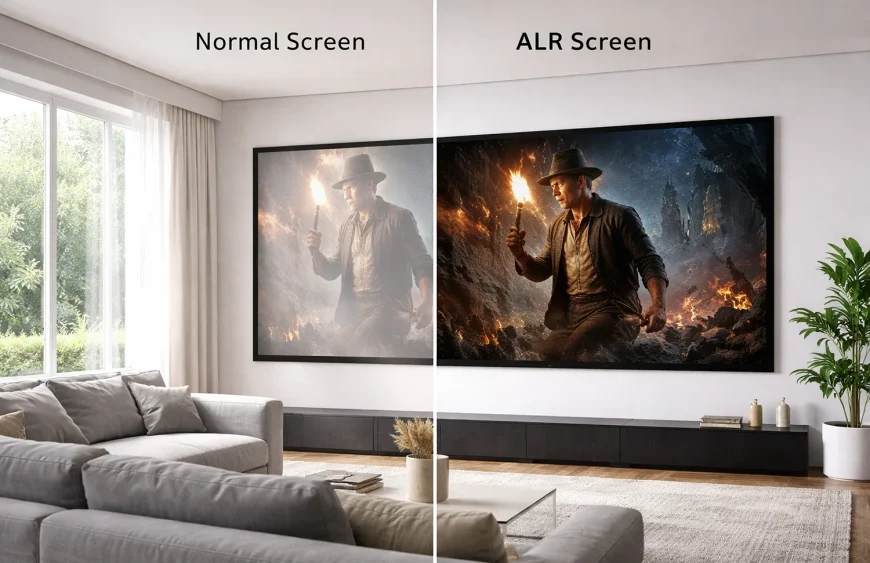
The real fix for a washed out projector image is an ALR screen, short for ambient light rejecting. A plain white screen reflects all light, including room light. An ALR screen reflects the projector’s light back to you while rejecting light from above and the sides.
The result is deeper blacks, stronger colour, and a watchable picture with the lights on. For a bright living room, an ALR screen does more than extra lumens ever will.
Match the screen to your projector. A floor-rising or fixed ALR screen made for an ultra-short-throw (UST) projector rejects overhead light especially well, because the projector sits low and close.
What about screen colour?
People often ask whether a grey screen helps. It can. A grey or dark ALR surface lifts contrast in ambient light better than plain white. It holds black levels instead of washing them out. A modern ALR screen builds this in, so you do not have to trade colour for contrast.
Can you use a projector during the day?
Yes, with the right setup. Combine a bright projector, some light control, and an ALR screen, and a projector works well in daylight. Skip the ALR screen, and even a powerful projector looks washed out once the sun is up.
The Tono floor-rising ALR screen
Tono’s floor-rising ALR projector screen is built for exactly this problem. It rejects more than 97% of ambient light and uses a 0.6 gain surface for deep contrast. Tono designs it for UST projectors. Because it is free-standing and electric, it rises from the floor with no wall holes or fixed install. Then it hides away again.
See the full projector screens range, or read how to choose a projector screen to match one to your room. For help, contact Tono.
Frequently asked questions
Why does my projector look washed out?
Room light is hitting the screen and lifting the black levels toward grey. Control the light, use enough lumens, and switch to an ALR screen to fix it.
How many lumens do I need for a bright room?
Aim for 3,000 lumens or more, and 3,500 and up for a sunlit room. Even then, pair the projector with an ALR screen for the best result.
Does an ALR screen really work?
Yes. An ambient-light-rejecting screen reflects the projector’s light back to you while rejecting overhead and side light. The picture keeps its contrast with the lights on.
What colour projector screen is best for a bright room?
A grey or ALR surface beats plain white in a bright room, because it holds black levels and lifts contrast. A purpose-built ALR screen gives the best result.