Shopping for an in-wall HDMI cable and seeing “CL2” and “CL3”? These are fire-safety ratings for cables run inside walls. The CL3 vs CL2 difference is small but worth understanding before you buy. This guide explains what each rating means, when you need one, and which to choose.
What are CL2 and CL3 ratings?
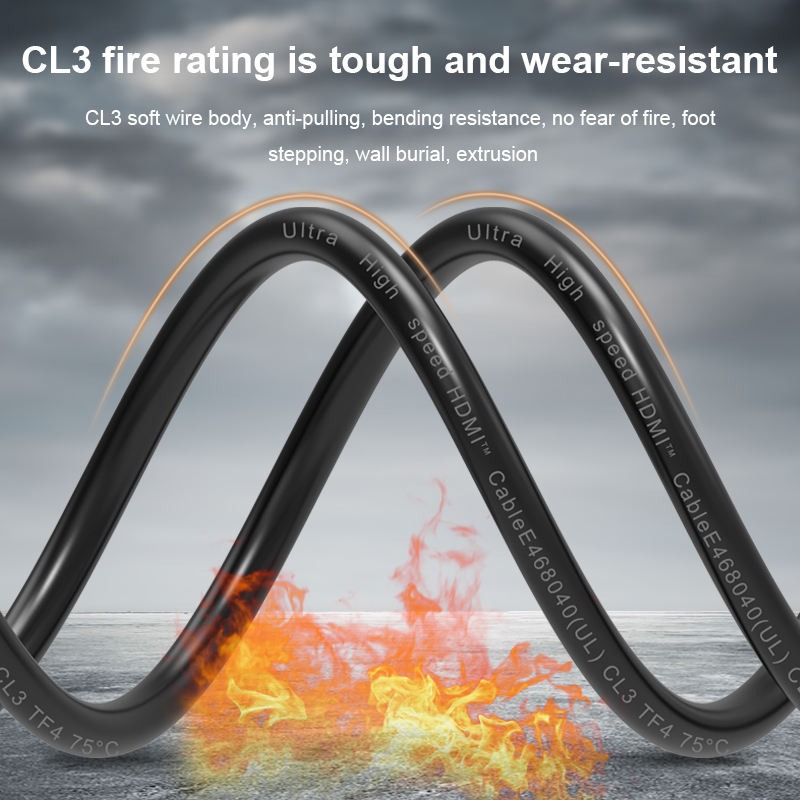
CL2 and CL3 are in-wall fire-safety ratings defined by the US National Electrical Code (NEC). They certify that a cable’s jacket resists fire spread, so the cable is safe to run inside a wall. The ratings also reflect a voltage class: CL2 cables are rated to 150 volts, and CL3 cables to 300 volts. Both are low-voltage signalling ratings. For an HDMI cable, the rating is about the jacket’s fire resistance, not the picture quality.
Though the NEC is a US code, installers worldwide use CL2 and CL3 as a safety and quality benchmark for in-wall cable.
CL3 vs CL2: the difference
The practical CL3 vs CL2 difference is the voltage class. CL3 carries a higher rating (300V) than CL2 (150V), so CL3 is the more capable of the two and suits slightly more demanding installs. Both are approved for in-wall use. For a low-voltage HDMI cable, either rating makes the cable safe inside a wall, but CL3 is the higher specification and a common default for AV installers who want one rating that covers everything.
| Rating | Voltage class | In-wall use | Best for |
|---|---|---|---|
| CL2 | Up to 150V | Yes | Standard in-wall low-voltage runs |
| CL3 | Up to 300V | Yes | In-wall runs; installer default |
| CMP (plenum) | Higher fire spec | Air-handling spaces | Ducts and plenum spaces |
When do you need a CL3 or CL2 cable?
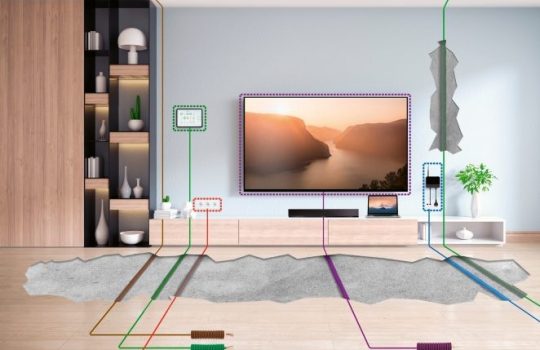
You need an in-wall rating whenever the cable runs inside a wall, ceiling, or floor. A standard, unrated HDMI cable isn’t built for permanent in-wall use and may not meet local fire codes. If the cable runs through an air-handling space (a plenum), you need a higher CMP (plenum) rating instead. For a normal in-wall AV run, a CL3-rated cable is the safe, future-proof pick.
Which Tono cable is CL3-rated?
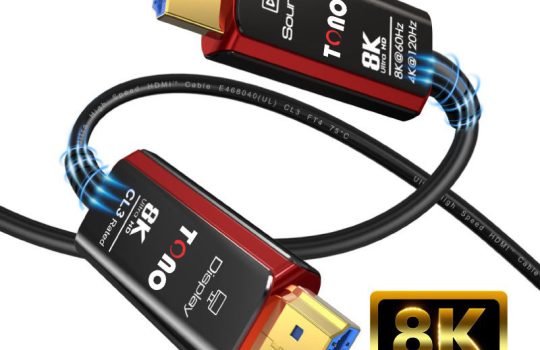
Tono’s Alpha 3 Red Edition is an 8K AOC fibre HDMI cable with a CL3 in-wall rating, built for permanent in-wall installs. Because it’s also a fibre cable, it carries 4K and 8K over long distances, so one cable solves both the distance and the fire-rating problem. If you’re routing it through a wall, see our guide to running HDMI in conduit.
Frequently asked questions
What is the difference between CL2 and CL3?
Both are in-wall fire-safety ratings from the US National Electrical Code. CL3 has a higher voltage rating (300V) than CL2 (150V), making it the more capable rating. Both are safe for in-wall use.
Is CL3 better than CL2?
CL3 is the higher specification, rated to 300V versus CL2’s 150V. For low-voltage HDMI, both are safe in walls, but CL3 covers more situations, so installers often default to it.
What does a CL3-rated HDMI cable mean?
It means the cable’s jacket meets the CL3 fire-safety standard for running inside walls. The rating is about fire resistance and safety, not picture quality.
Do I need a CL3 HDMI cable?
You need a CL2 or CL3 cable any time the cable runs inside a wall, ceiling, or floor. For air-handling (plenum) spaces, you need a higher CMP rating instead.
Is a CL3 cable the same as a fibre HDMI cable?
No. CL3 is a fire rating, while fibre (AOC) is the signal technology. A cable can be both. Tono’s Alpha 3 is a fibre HDMI cable that is also CL3-rated.
The bottom line
CL2 and CL3 are fire-safety ratings for in-wall cable, not picture-quality grades. CL3 is the higher-rated of the two and the safer default for permanent in-wall AV runs. Match the rating to the install, CL3 for in-wall and CMP for plenum, and your cabling meets code and stays safe.
Running cable in a wall? Explore Tono’s CL3-rated fibre HDMI cables or get in touch.